
HSI Warrants: How to Avoid Losing Your Trading Capital
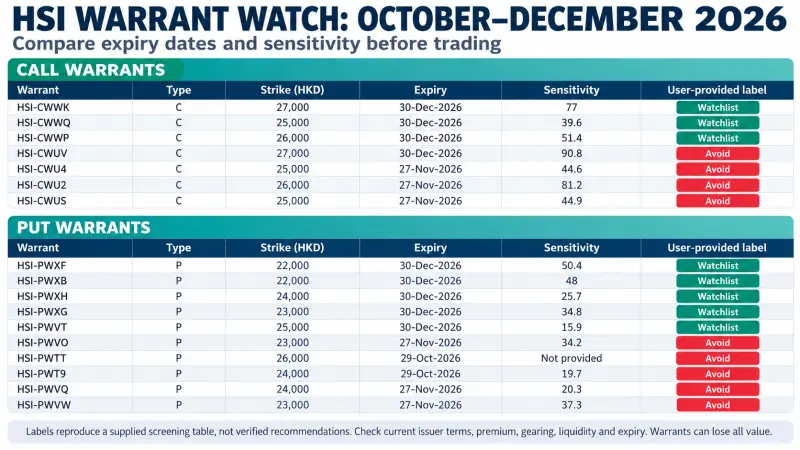
Hong Kong-listed HSI warrants can offer leveraged exposure to the Hang Seng Index, but the wrong strike price, high sensitivity, poor liquidity or approaching expiry can cause substantial losses. Learn how to evaluate warrants before trading and why capital protection must come first.
HSI Warrants: One Wrong Trade Can Wipe Out Your Investment
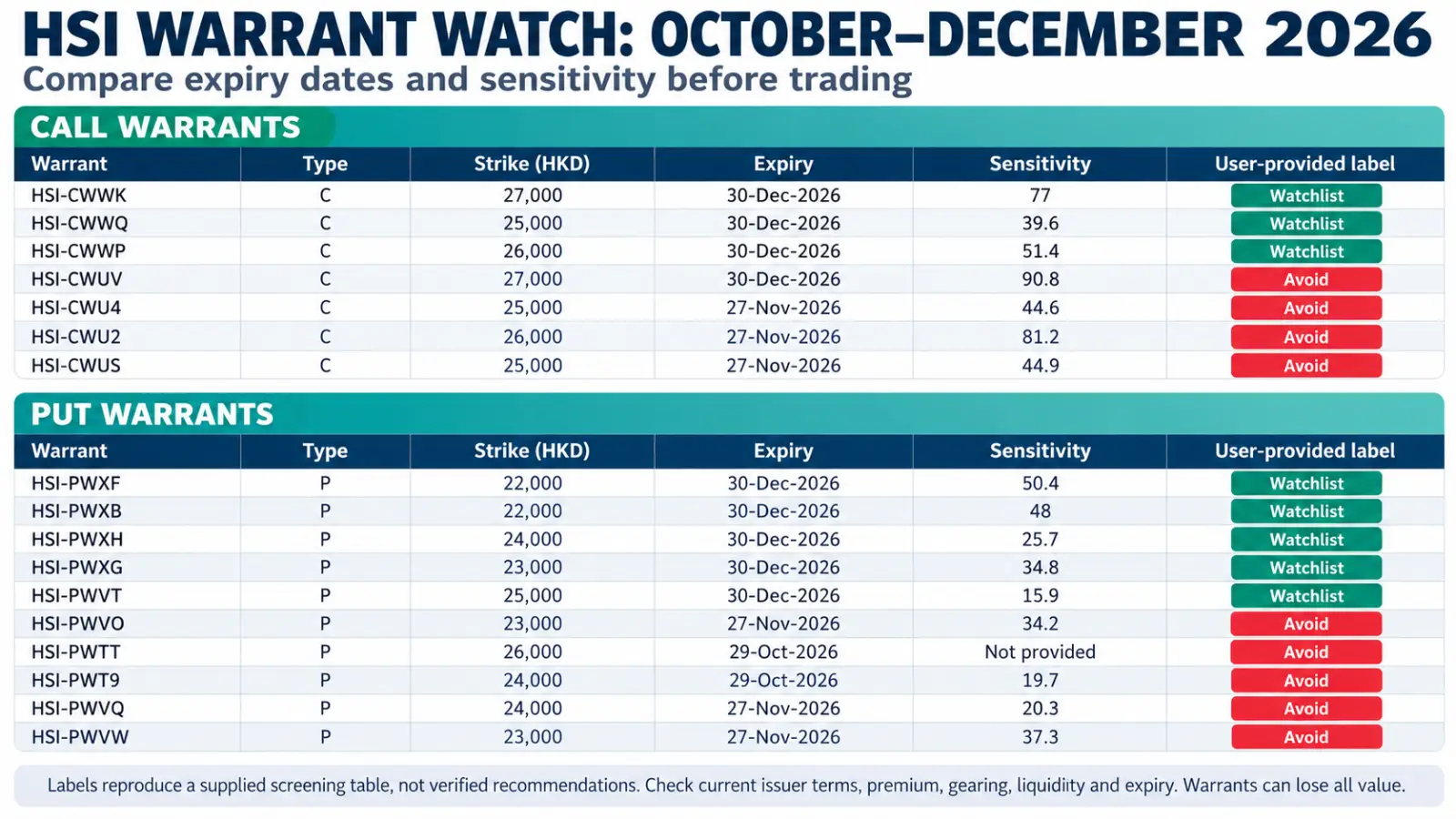
Many traders lose money trading Hang Seng Index (HSI) warrants because they focus only on the index's direction and ignore the warrant's expiry date, strike price, sensitivity and pricing. Even when the market moves in the expected direction, a trader can still lose money if the warrant is poorly selected or loses value over time.
The first rule is simple: choosing the right warrant is just as important as predicting the market. HSI warrants are leveraged products, and some can expire worthless, resulting in the loss of the entire amount invested in that warrant.
1. Understand the Strike Price
The strike price is the level at which the warrant's payoff is determined under its terms. Call warrants generally benefit from a rise in the underlying index, while put warrants generally benefit from a fall. However, the strike price alone does not determine whether a warrant is attractive. Consider the current HSI level, the distance to the strike, the warrant premium and the time remaining.
Keep reading. It is free.
You have read the first third of this story. Create a free Bridge 2 Profit account to unlock the full article, plus our daily market wrap.
- Full access to every story
- Daily and weekly market wrap by email
- Breaking-news alerts for the markets you follow
Already registered? Log in
No card required. We never sell your data. See our Privacy Policy.
THE DAILY MARKET WRAP, IN YOUR INBOX BY 8 AM IST
One email, every trading morning. The moves that mattered, why they mattered, and what to watch next.