
Why America Celebrates Thanksgiving Day and Black Friday
From a 1621 harvest gathering in Plymouth and a Civil War call for unity to Philadelphia traffic jams and nationwide retail frenzies, here is how two back-to-back November traditions shaped American culture.
Every fourth Thursday in November, millions of Americans gather around dining tables for roasted turkey, stuffing, cranberries, and pumpkin pie. Less than twenty-four hours later, the quiet reflection of Thanksgiving Day gives way to the high-energy rush of Black Friday, the unofficial kickoff to the holiday shopping season. While the two events can feel like polar opposites one rooted in gratitude and family, the other in commerce and discounts their histories are tightly intertwined. Understanding why the United States celebrates both requires looking back four centuries through colonial survival, national crisis, and the rise of modern retail.
The 1621 Harvest and the Myth of the "First Thanksgiving"
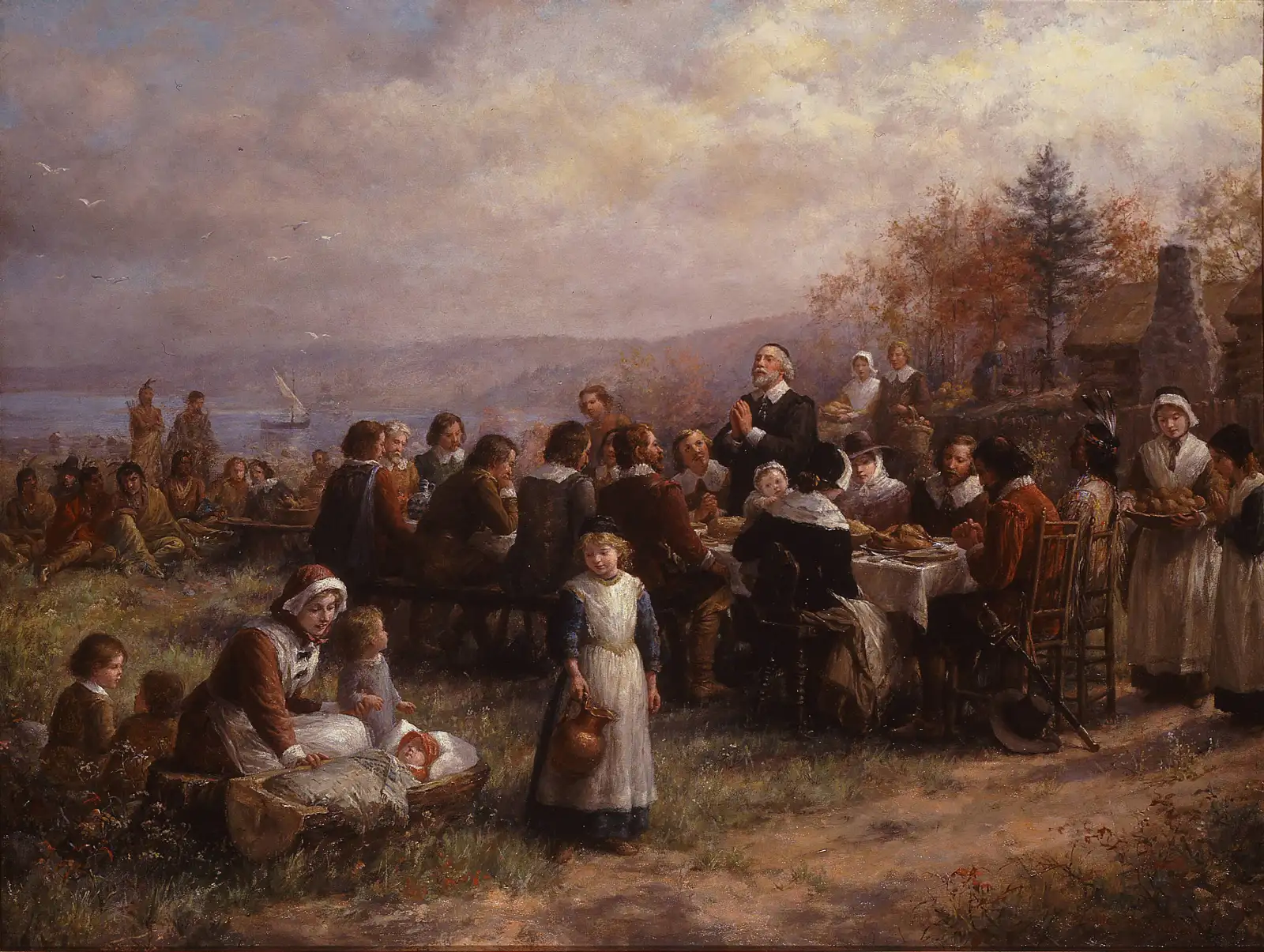
In American popular memory, Thanksgiving begins in the autumn of 1621 at Plymouth Colony in present-day Massachusetts. Following a brutal first winter, the Separatist Puritan settlers known as the Pilgrims held a three-day feast to celebrate their first successful harvest, joined by members of the neighboring Wampanoag nation. For centuries, artists and educators have romanticized this gathering. In Jennie Augusta Brownscombe's 1925 oil painting Thanksgiving at Plymouth, colonists in dark attire bow their heads around a long outdoor table while Indigenous guests look on-a famous visual that reflects 20th-century nostalgia more than 17th-century reality, as the Pilgrims did not dress in such uniform black-and-white costumes or dine at formal banquet tables.
Historians note that the 1621 meal was not an annual holiday, nor was it the only early observance of its kind; English settlers in Virginia recorded a thanksgiving service near Jamestown as early as 1619. For New England Puritans, traditional "days of thanksgiving" were solemn religious days of prayer and praise called periodically to mark specific blessings, such as military victories or the end of a drought. Moreover, the brief diplomatic alliance sealed in 1621 eventually collapsed into brutal conflict, including King Philip's War in 1675-76. Today, while many Americans view the day as a celebration of abundance, many Indigenous Americans observe a National Day of Mourning to remember the displacement and violence that followed European colonization.
Keep reading. It is free.
You have read the first third of this story. Create a free Bridge 2 Profit account to unlock the full article, plus our daily market wrap.
- Full access to every story
- Daily and weekly market wrap by email
- Breaking-news alerts for the markets you follow
Already registered? Log in
No card required. We never sell your data. See our Privacy Policy.



THE DAILY MARKET WRAP, IN YOUR INBOX BY 8 AM IST
One email, every trading morning. The moves that mattered, why they mattered, and what to watch next.