
CFD Trading vs Spot Trading: How to Trade More With Less Capital
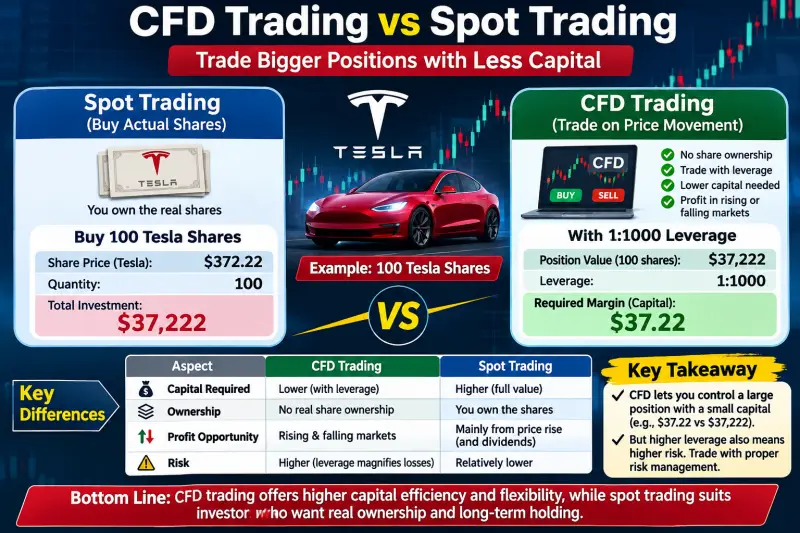
Contracts for Difference (CFDs) allow traders to gain exposure to larger positions with a smaller initial deposit through leverage. But is CFD trading better than buying shares in the spot market? Here is a simple comparison using 100 Tesla shares as an example.
What Is the Difference Between CFD and Spot Trading?
Trading in the financial markets does not always require a large amount of capital. With Contracts for Difference (CFDs), traders can control a larger position by depositing only a small percentage of its total value. This is called leverage.
In spot trading, you buy the actual shares and pay their full purchase price. For example, if you want to buy Tesla shares, you generally need enough money to pay for all the shares you purchase.
In CFD trading, you do not own the actual shares. Instead, you trade a contract that tracks the share price. You can potentially profit from rising or falling prices, depending on your trading position.
Example: Buying 100 Tesla Shares
Tesla's latest reported closing price is approximately $372.22 per share as of October 23, 2026.
Let's compare buying 100 Tesla shares in the spot market with opening an equivalent CFD position using hypothetical 1:1000 leverage.
SPOT MARKET-$37,222
100 shares × $372.22 per share
CFD WITH 1:1000 LEVERAGE - $37.22
$37,222 ÷ 1,000 = theoretical minimum margin
This calculation excludes fees, spreads, currency conversion, financing costs and any additional margin required by the broker. A leverage ratio of 1:1000 may not be available for Tesla CFDs, particularly for retail clients in regulated markets.
Open free CFD account - https://www.avatrade.com/?tag=222583
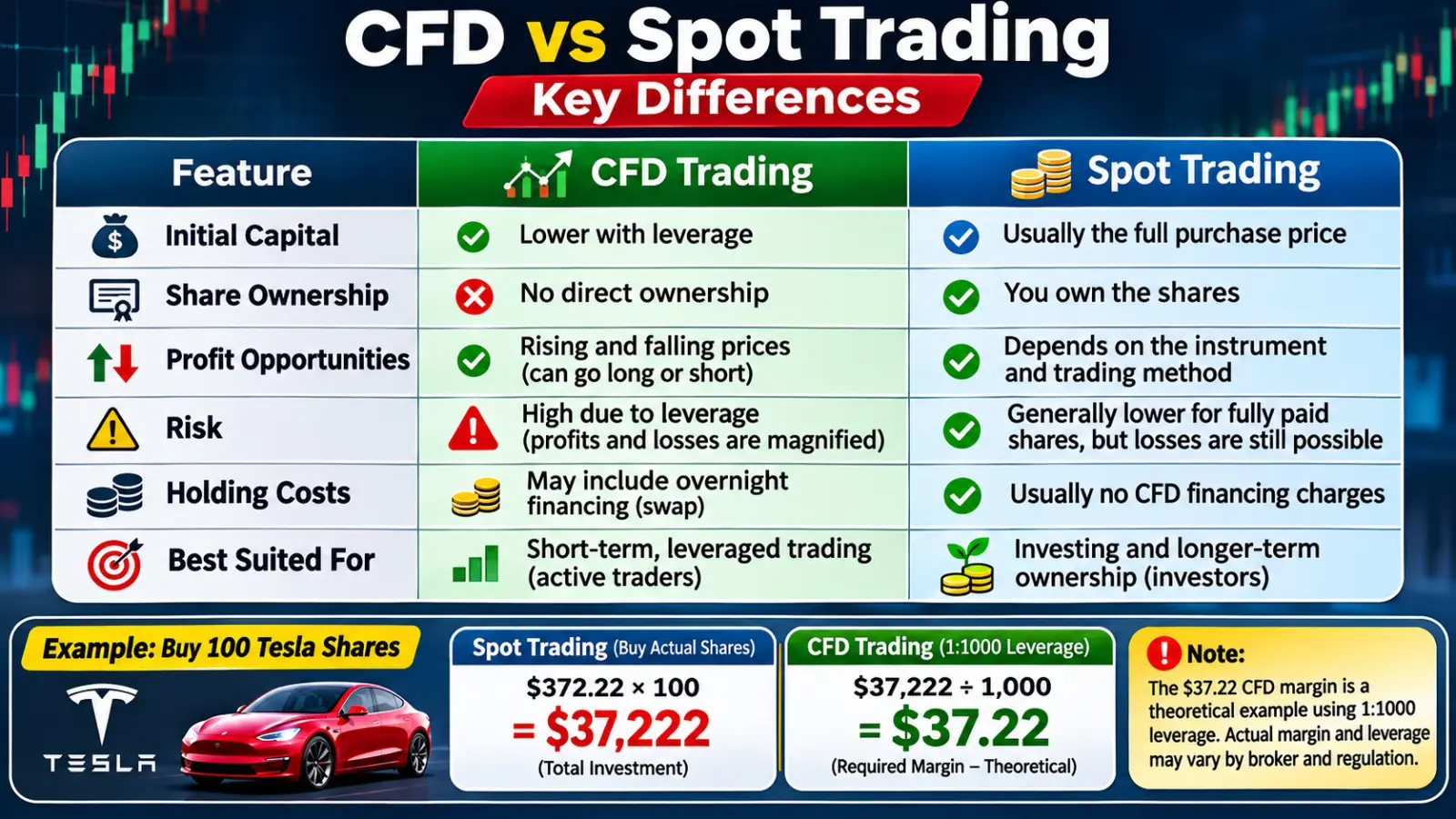
CFD vs Spot Trading: Key Differences
Is CFD Trading Better?
CFD trading can be attractive for traders who want to control larger positions with less upfront capital. However, leverage magnifies losses just as quickly as profits. Even a small adverse price movement can consume a large percentage of your deposited margin and may trigger a margin call or forced closure.
Spot trading may be more suitable for investors who want actual share ownership and do not want leveraged exposure.
Conclusion: CFDs offer greater capital efficiency, but they are not automatically better than spot trading. Understand the leverage, total costs, broker rules and potential losses before choosing either method.

THE DAILY MARKET WRAP, IN YOUR INBOX BY 8 AM IST
One email, every trading morning. The moves that mattered, why they mattered, and what to watch next.