
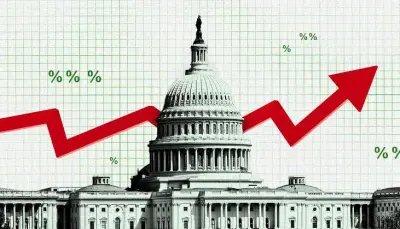
What Fed Interest Rates Mean for Stocks and Commodities
he Federal Reserve held its benchmark rate at 3.75% to 4%. Here's how interest rates can affect markets-and what traders should watch beyond the headline decision.
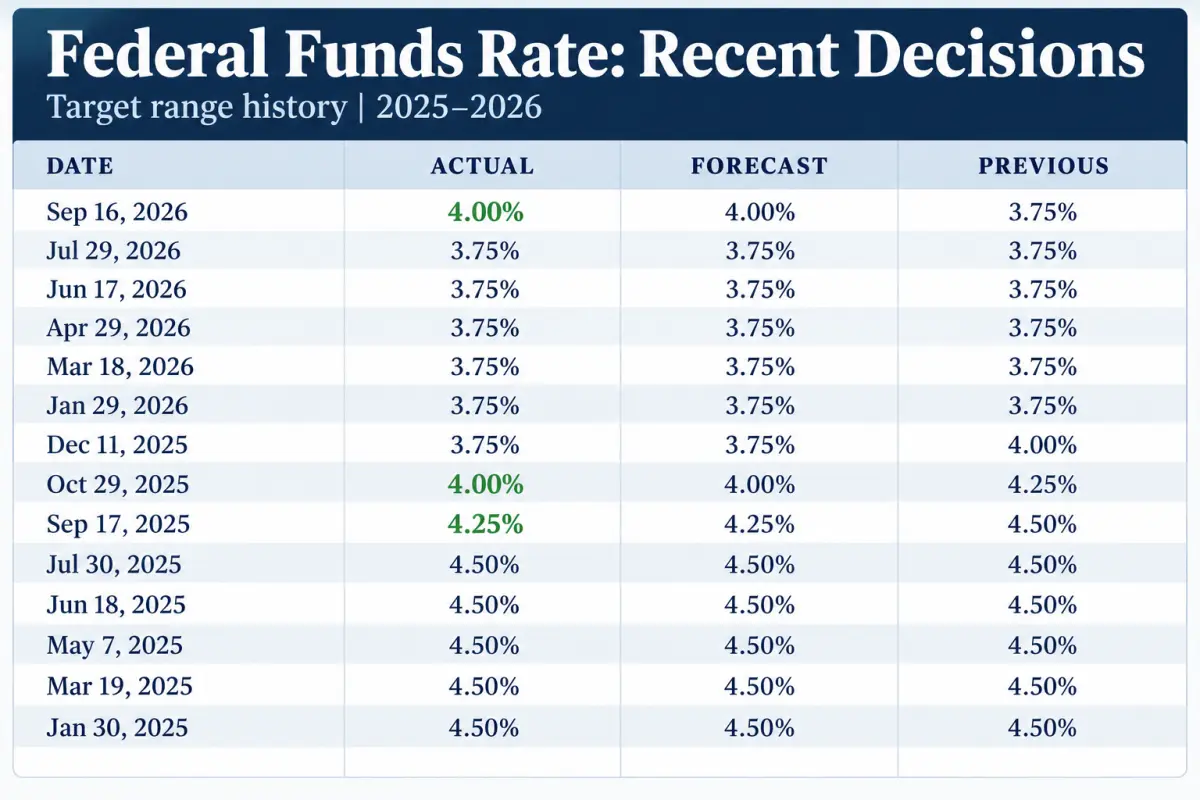
An interest rate is the cost of borrowing money, or the return a lender receives for lending it. The Federal Reserve's federal funds rate is a target range for the rate banks charge one another for overnight loans. It also influences other borrowing costs, including some business loans, credit cards and mortgages.
On October 28, 2026, the Federal Open Market Committee (FOMC) kept its target range at 3.75% to 4%. The committee said economic activity was expanding strongly, while inflation remained elevated. Two members preferred a quarter-point increase. That split matters because markets respond to the likely path of rates, not just the decision made at one meeting.
Why stocks react
Higher rates can make borrowing more expensive for companies and consumers. That may slow expansion, reduce spending and weigh on company earnings. Higher yields on cash and bonds can also make shares less attractive by comparison. Growth stocks, whose valuations often depend on profits expected far in the future, can be especially sensitive: those future earnings are worth less when discounted at a higher rate.
Lower rates can ease financing costs and support demand, but they do not guarantee rising share prices. Investors may interpret rate cuts as a response to a weakening economy, which could hurt earnings expectations.
Why commodities react
Many commodities are priced in U.S. dollars. When U.S. rates rise relative to rates elsewhere, the dollar may strengthen, making dollar-priced commodities more expensive for buyers using other currencies. That can pressure demand and prices. Higher rates also raise the cost of financing inventories and, for some buyers, holding assets such as gold, which pays no interest.
Supply and demand remain central. A crop shortfall, oil disruption or surge in industrial demand can outweigh rate effects. Gold can also attract investors seeking a haven during uncertainty, even when yields are high.
What traders should watch
Start with expectations. If markets have already priced in a decision, the announcement itself may cause little movement. Compare the outcome with forecasts, then read the statement for changes in the Fed's assessment of inflation, jobs and growth. Watch dissenting votes, too: they can signal disagreement about the next move.
Track Treasury yields and the dollar for clues about how traders interpret the Fed. Then check whether stocks and commodities confirm that signal or move for other reasons, such as earnings or supply news. Finally, consider upcoming inflation and employment data, positioning and volatility. Rates shape financial conditions, but prices reflect many forces at once. No single indicator is a reliable trading signal; use a plan, manage risk and avoid treating a rate decision as a market forecast.
THE DAILY MARKET WRAP, IN YOUR INBOX BY 8 AM IST
One email, every trading morning. The moves that mattered, why they mattered, and what to watch next.